A. Introduction:

There is a HUGE amount of literature about (human) physiology; books, articles, reviews, podcasts, YouTube films etc etc. On this page, I have listed those books, articles etc. that I find most impressive and useful. Have fun with them.

B. Books:

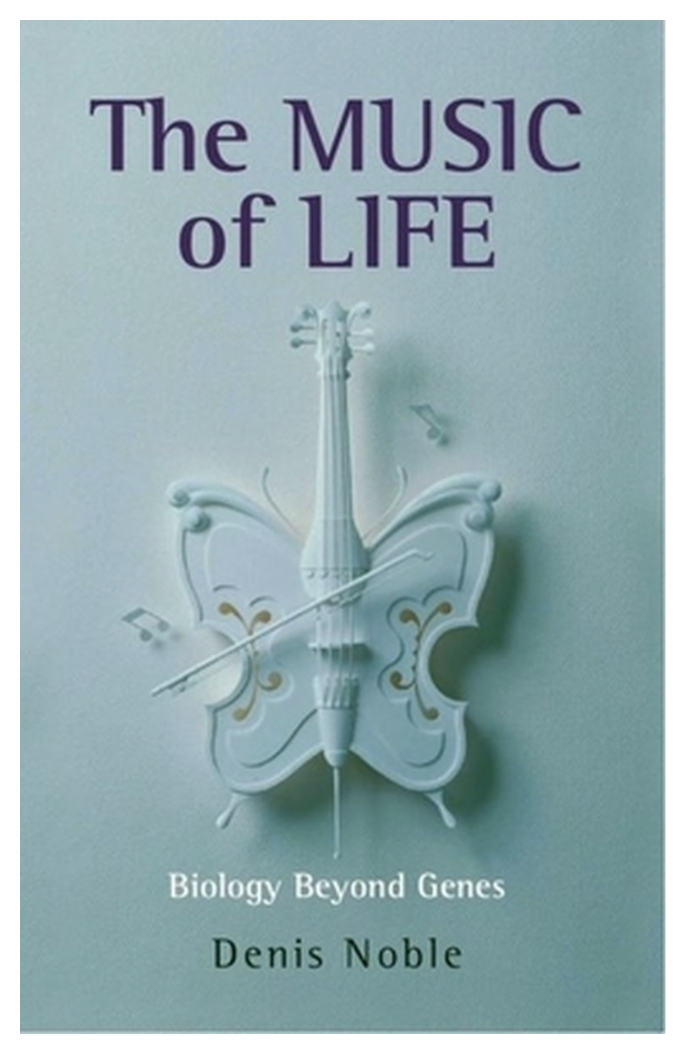
Dennis Noble: The Music of Life. Oxford Univ. Press 2006. As Eric Werner wrote in Science: “Noble presents his case for the systems approach with elegance and simplicity that hides unncessary details …

The book can be recommended to anyone, novice or professional“.

It also inspired me to sketch the ‘levels in physiology’ as illustrated in A.1.1.

Bill Bryson: The Body. Doubleday 2019. As usual with Bill Bryson, this book offers a unique exploration, this time of our inner world, how our body functions, what can go wrong and how it then often heals itself. A fantastic and ‘unscripted’ guide into the wonders of our body.

A.C. Guyton: There are many physiology textbooks, in English and in many other languages, but the most outstanding one certainly has to be the one originally written by A.C. Guyton.

First published in 1956, it has been upgraded in many later editions. Unfortunately, Guyton suddenly passed away in a car crash 2003, together with his wife,  but his work has fortunately been continued and upgraded by M.E. Hall and is available in the 14th edition (2021): “Medical Physiology”.

Philip Ball: How Life Works (2023):

A new vision of the workings of life; from genes to the whole organism. In this book, Philip Ball shows that although genes are crucial, they do not dictate how an organism develops and functions. He describes, in minute details, all the steps from the individual gene, through the cellular components, individual cells, tissues, organs and finally the whole organism. Warning; this is not an easy read!

Jason Roberts: Every Living Thing (2024):

In the eighteenth century, two men dedicated their lives to the same daunting task: identifying and describing all life on Earth. Their approaches, however, could not have been more different. Carl Linnaeus, a pious Swedish doctor, believed that life belonged in tidy, static categories. Georges-Louis de Buffon, an aristocratic polymath and keeper of France’s royal garden, viewed life as a dynamic swirl of complexities.

With elegant, propulsive prose grounded in more than a decade of obsessive research, bestselling author Jason Roberts tells an unforgettable true-life tale of intertwined lives and enduring legacies, tracing an arc of insight and discovery that extends across three centuries into the present day.

C. Articles:

Articles: 

Science that speaks: The public face of physiology, by DW Walmsley, D Hurt, AA Dahesh, K Williams and D M Bailey. A nice and relevant editorial exploring the ‘public face’ of physiology.

Prabhakar NR. 2019 Nobel Prize in Physiology or Medicine. Physiology 35: 81-83, 2020 (available as Open Access) 

6 Scientists Who Shaped Physiology | American Physiological Society (18/9/25): nice article about 6 famous physiologists! (Bernard, Cannon, August and Mary Krogh, Schmidt-Nielsen, Guyton)

See also the bit about living at high altitudes at D.2.4. Anemia and Polycythemia, section H.
D. Reviews:

A nice and historical review of probably the most important concept in physiology: homeostasis!

Homeostasis: The Underappreciated and Far Too Often Ignored Central Organizing Principle of Physiology. By Billman GE in “Frontiers in Physiology”, March 10, 2020. (available as Open Access)


Page Menu: